Wednesday, July 21, 2010

THE STOOGES IN OSTRAVA

The first time I saw Iggy Pop was at the Apollo in Manchester in 1977. On the negative side, the Stooges, with whom he had made three albums that I had done my level best to wear out my copies of with constant playing, were history, but, in the plus column, so, as an NME journalist put it at the time, was “the singer’s propensity for getting utterly gaga on nefarious pharmaceuticals” and his frequently looking like a red-hot candidate for the next premature rock’n’roll death. Oozing rude health and working together with David Bowie, who was then probably at the peak of his powers, he was in the middle of the burst of creativity that spawned both ‘The Idiot’ and ‘Lust for Life’. It was brilliant, one of the standout gigs of a period of my life when it seemed that music really was going to be the answer to most of the questions. It wasn’t, of course.

Iggy’s live performances continued to be the stuff of legend, but his studio output was non-essential for me after that – competent big-noise rock with a bunch of sidemen who knew what they were doing, but not a patch on, say, this:

The first time I saw Ostrava was in 1991. I was expecting the worst. I’d read in the very first edition of the Rough Guide to Czechoslovakia that “If you told a Czech you were going to Ostrava, they’d probably think you were mad” and everybody I knew said much the same – not many of them had been there, but that didn’t stand in the way of their knowing it was rough and primitive and dirty and full of morlocks and football hooligans and bleached blonde leopardskin women like Bet Lynch. What I found was a big scruffy industrial city which I liked straight away; more than anywhere else here it reminded me of home. It was a lot like its counterparts in the north of England, and the people had a directness and style to them that felt comfortable to me.

I’ve been back there many times now. I go there several times a year for one reason or another. It’s changed a lot since then; like so many other post-industrial cities worldwide, it’s been busy trying to reinvent itself. There’s Stodolni, with its bars and nightlife, there’s an ambitious bid to become the European City of Culture in 2015, and there’s an annual music festival, Colours of Ostrava, which is held in the heart of this surprisingly green city and just grows and grows. This year was its tenth anniversary and it was sold out the best part of a month beforehand, apparently the first time this has ever happened in the Czech Republic.

The headline act this year was Iggy. Not with a bunch of LA henchmen, though, but with as many of the original Dum Dum Boys from forty years ago as possible – Dave Alexander is dead, Ron Asheton likewise, but the others – Rock Action, James Williamson, and Steve Mackay – were all going to be there. Four out of six of them surviving till now is actually quite an achievement, given the talent for self-destruction those guys had. But were they going to be any good? Although the music on their distinctly pedestrian 2007 album ‘The Weirdness’ suggested they might not be, word of mouth and reviews of other live shows they’d done said that they were going to be present and probably far more correct than back in the day.

It rained on and off the whole day, not enough to really dampen spirits but enough to thin out the crowd a bit, which was just fine by me – my days in the moshpit are well in the past. Ten o’clock came round, and then, after a brief word from the festival organizers, the Stooges trooped on and a launched straight into their first selection.

Iggy started out in a singlet, which had me thinking that maybe age was getting to him – he is 63, after all, an age when early to bed with a nice cup of cocoa is perhaps more in order than stirring up a crowd of thousands – but within thirty seconds it had gone and the most renowned torso in the business was stripped for action. He may have the face of a badly done Egyptian mummy these days and the body might not be what it once was, but he’s still got the voice and the moves and the sheer presence and can rip it up better than almost anyone I’ve ever seen play live, working the stage like some wild mix of a big jungle cat, a pole dancer, an anaconda going through a fit, and a hooker in a display window while behind him the band laid down a maelstrom of pure vicious noise that had the ground beneath my feet vibrating.

You can’t really talk about Greatest Hits in the Stooge context, as they never had any, but the set they played was all killer, no filler: ‘Raw Power’ was followed by ‘Kill City’ and ‘Search and Destroy’, and I can’t come up with the names of too many bands that have triple whammies of that calibre to kick off with. There wasn’t a lot of banter between songs, although at one point, to the bemusement of the no-necks guarding the stage, Iggy did mischievously invite a bunch of guys to join them and dance. They did most of ‘Raw Power’ (although not my personal favourite, ‘Your Pretty Face Is Going To Hell’); ‘1970’ and ‘Fun House’ from the second album, as well as a few more left-field choices such as ‘Open Up And Bleed’, ‘I Got A Right’, and ‘Cock In My Pocket’ (introduced as ‘Up Your Ass’), plus ‘I Wanna Be Your Dog’ and, to finish with, ‘No Fun’, which may have been accurate forty-one years ago (!) when it was written, but certainly wasn’t true on Sunday night in Ostrava in the rain. It was the biggest fun I’ve had at a concert for years, up there with the best of them. Gentlemen, I thank you.

Wednesday, June 30, 2010

VUVUZELAS, WEMBLEY GOALS, AND DAMP SQUIBS: THE 2010 WORLD CUP

Like hundreds of millions of others, my activities in the last few weeks have revolved around the scheduling of the matches in the 2010 World Cup, and after a dreadfully slow start it’s turned into a rather fine competition; the last eight include a whole bunch of really good teams and I’m looking forward to the remaining seven games. The Saffers have done a great job – lovely stadia, brilliant TV coverage , especially some of the stills and close-ups, and the best ever World Cup theme tune bar none. And I’d much rather the vuvuzelas than that stupid Mexican wave any day.

As for England, well, my patriotism is usually of the lukewarm variety, but I turned out with hope in my heart. Ten minutes in, we were 1-0 up against the USA after a slick move and a neat finish and things were looking rosy. Maybe not as rosy as The Paper That Supported Our Boys would have had us believe with this front page after the draw for the group was made:


But still pretty good. Then came that pub-team-goalkeeper-with-a-particularly-bad-hangover howler from poor Robert Green and all of a sudden things weren’t looking so hot after all. Next up was the wretched nil-nil draw with Algeria, where our ‘golden generation’ (an appellation that seems to reflect their grotesque earnings rather than their track record) turned in a performance that would have had the average junior school sports teacher weeping in frustration, followed by the get-out-of-jail result against mighty Slovenia that meant we staggered out of the group and in which we showed vague hints of the form in the qualifiers that had got us to the finals and had had the redtops bigging up our chances goodstyle.

Enter Deutschland. The old enemy. And also the first genuinely good side we’d faced. Two-nil down after barely half an hour and staring disaster in the face, then we got one back from a set-piece and then this:


Quite how the officials failed to spot that one (apparently they’ve been calling them ‘Wembley goals’ in Germany for over forty years now – can’t think why) has been one of the biggest talking points of the last few days. But it’s hardly a unique incident: the perfectly good winner the US scored against Slovenia that was disallowed for offside, the way Brazil’s Luis Fabiano handled the ball not once but twice to set himself up for his second against Côte d’Ivoire, and the ‘goal’ by two-yards-offside Carlos Tevez that started Argentina off on their route to victory against a Mexican team that had shaded them up to that point are perhaps the three that struck me most. This kind of incompetence is just ludicrous at this level of the world’s most popular sport and the howls of protest from the aggrieved parties are understandable.

It’s not as if the technology doesn’t exist or would be expensive or hard to install – it’s already there, at all sorts of levels of the game, and certainly at a championship like this, where the number of camera angles the South African TV people have been able to deploy for juicy morsels of the action has been quite staggering. And it’s not as if other sports don’t take advantage of it – to name but three, ice hockey, cricket, and tennis have all adapted to the modern world and what it can offer when it comes to dodgy calls. As for football, well, Sepp Blatter said as recently as April that there was no way they were going to go down that road, but I see from the press today that now he’s backtracking on his Luddite commitment to no technology, so let’s watch this space and see what happens.

But let’s be honest. No technology in the world would have prevented England from getting thrashed on Sunday, for the simple reason that they weren’t very good on the day and, whatever the tabloids might say, aren’t very good anyway. We may have invented the game, but the idea that the way we do it is the genuine article and Johnny Foreigner’s efforts are not quite the way it should be played is as horribly outdated as cricket dividing the Gentlemen from the Players. Just compare Germany, with their speed, movement, fluidity, teamwork, and ability to surge upfield and strip a defence bare, with England: what do we have?

A lot of people seem happy to dump the blame on the guy my mate Mark in Budapest describes as ‘the strict headmaster on the touchline’, the six-million-quid-a-year man Fabio Capello, and as the coach of course he has to take at least some of the blame. Our rigid formation; a ponderous defence; a midfield that showed little or no creativity; a toothless attack; playing a big butch target man (and how many teams at this level use one of those, for God’s sake?) who may be a lovely guy but who has a tendency, to paraphrase Frank Worthington, to trap the ball further than a lot of other players can kick it; all these can be laid at his door to some extent, I suppose. But there are other things I don’t think can.

A 100-hundred-miles-an-hour approach to the game that has always valued endeavour and commitment and ‘putting in a shift’ more than technical ability or wit or flair or subtlety; the frequent inability to find a team-mate with the simplest of passes; no notion of the value of keeping possession, and no patience with the ball, epitomised by the tendency to hoof it aimlessly upfield (the Gary Neville, as it’s called in the trade) rather than actually thinking about what to do with it; the English approach, in other words. Put it all together with unpredictable errors like Green’s and the lack of form shown by some key players and it’s not exactly a formula for success. More Dad’s Army than Cool Britannia, I fear.

Wayne Rooney has taken quite a bit of stick, and he certainly bore no resemblance to the player who has been terrorising Prem defences these last few seasons. But he’s far from alone in that. Between them Rooney, Didier Drogba, Fernando Torres, the King of Petulance aka Cristiano Ronaldo, and even the wonderful Lionel Messi had only scored a total of two goals by the time the quarter-finalists were known. The odds you could have got on that before the tournament would surely have been astronomical.

But at least there were others on whose shoulders the burden of expectation was even heavier than on England and who disappointed their people even more cruelly. The holders, Italy, for one, who needed to beat Slovakia to get out of their group and ended up losing in a welter of tears; now they really were Dad’s Army. But pride of place must go to les Bleus, with one point, enough skulduggery in the camp to build a year’s worth of soap operas around, and the wrath of a nation awaiting them on their ignominious return. Karma coming home to roost if ever there was; after that shameful handball incident against Ireland that got them there in the first place, they deserved nothing better. I wonder just what the Irish word for schadenfreude is?

Monday, May 24, 2010

IT'S ALL IN A NAME...

I heard not so long ago that the University of Western England is going to run a project designed to uncover the origins of every family name in the UK. What a wonderful idea. My own, so my dad told me, is an old Norse term for someone who lives in a valley, which is kinda prosaic, but there are all sorts of gems out there. I’ll return to this from a Czech point of view once I’ve put in the necessary research, but for now let’s begin with football, which, as in so many other areas, throws up some real gems.

Africa rather corners the market in weird and wonderful first names. Surprise Moriri, Naughty Mokoena, and Tonic Chabalala all ply (or used to) their trade in South Africa. And let’s not forget Bongo Christ, who hails from Congo. But these guys will have to go some to compete with Zimbabwe’s Laughter Chilembe, Have-A-Look Dube, Method Mwanyazi, and Danger Fourpence.

Another Zimbabwean, Limited Chicafa, has the kind of name that is just begging for its owner to be transferred to Juventus. In the season which, mercifully for them, has just ended, the Old Lady regularly featured a player called Ciro Immobile, although a cynic might note that with the number of defeats they suffered they might as well all have been called that. I think Limited would fit in just fine there.

Another fine Italian name belongs to the Australian Danny Invincibile, whose career has taken him to Swindon and Kilmarnock, who are both anything but. Also from Australia we have Norman Conquest, a man whose parents either had a great sense of humour or were potential Nobel laureates in obtuseness. Another whose folks’ choice probably gave him a few hard times at school has to be Wolfgang Wolf, who actually was the manager of Wolfsburg for some time – you couldn’t make it up, could you?

Leaving Europe once more, a big ‘hello’ to Johnny Moustache, from the Seychelles, and let’s spare a thought for Brazil’s Kaka and Hulk, who actually chose their noms de ballon, the silly billies. Still in Brazil, Rafael Scheidt never managed to overcome his surname at Celtic and Angelico Fucks featured in what has to be one of the greatest football headlines ever:


And Vágner Love just sounds like a porn star.

Small wonder, perhaps that Lyon’s Brazilian defender Fred opted for something a bit more prosaic.

Then, of course, there are the names that are simply unfortunate: Portuguese goalkeeper Quim, who gave the impetus to one of my all-time favourite gags on the Guardian’s football podcast, Germany’s Stefan Kuntz, Romanian international Razvan Rat, former England internationals Harry Daft and Segar Bastard, and a trio who have graced various English teams in the last decade or two, Nicky Butt, Dean Windass, and Danny Shittu. And Milan Fukal (there’s a Czech connection) is a man who, had his move to Derby County worked out, could have inspired some truly deathless chants.

But for my all-time favourites, we need to turn for inspiration to the world of film, to be precise, the Coen Brothers’ wonderful The Big Lebowski. Here’s some dialogue from the scene where the Dude, played by Jeff Bridges, goes to see Maude Lebowski (Juliane Moore) in her art studio:


MAUDE: Does the female form make you uncomfortable, Mr. Lebowski?

DUDE: Is that what that's a picture of?

MAUDE: In a sense, yes. Elfranco, my robe. My art has been commended as being strongly vaginal. Which bothers some men. The word itself makes some men uncomfortable. Vagina.

DUDE: Oh yeah?

MAUDE: Yes, they don't like hearing it and find it difficult to say. Whereas without batting an eye a man will refer to his "dick" or his "rod" or his "Johnson".

DUDE: "Johnson"?

Step forward, Dick Johnson (former goalkeeper of Tranmere Rovers) and Rod Johnson (Leeds United and Doncaster Rovers, among others). Congratulations, gentlemen. You win. And an honourable mention to American tennis player Andy Roddick.

Monday, May 10, 2010

WAKEY WAKEY!

Recognise this?


No? Stop wasting your time on internet trivia and beg, steal, borrow, or illegally download ‘The Ipcress File’ and don’t come back until you’ve watched it and made thorough notes. Yes? Read on.

Last night I watched it once again. I first saw it many years ago but have returned to it at regular intervals since then and it has never failed to delight me. Michael Caine’s performance as Harry Palmer is so cool you could build a mojito around it, and his enthusiasm for the kitchen was one of the main reasons why, when I was a teenager, I decided that cooking was a good thing for a guy to be able to do; the fact that the mushrooms he made such a fuss over were tinned rather than fresh is something I can accept as a sign of the times, just like his unfortunate tendency to refer to women as ‘birds’. I can forgive him almost anything for that moment when he says that he only takes off his glasses when he’s in bed.

One thing that did amuse me, though, was that when he was cruelly torn from the arms of Morpheus at the start of the film the time his alarm clock showed when he eventually bothered to turn it off, after slowly waking up, getting out of bed, and opening the curtains in a leisurely manner first, was eight o’clock. My immediate reaction was to burst out laughing. My second was to realise that this was another of those moments, like staying up late to watch Lukaš Bauer skiing in the Winter Olympics, when you realise you’ve changed. When I lived in England I too used to regard it as a gross imposition to have to get up at that time of the day and needed the combined ministrations of a strong cup of tea and ‘Today’ on the radio in order to face the world. Now my alarm is set for half past six and more often than not I’m up before it. What went wrong?

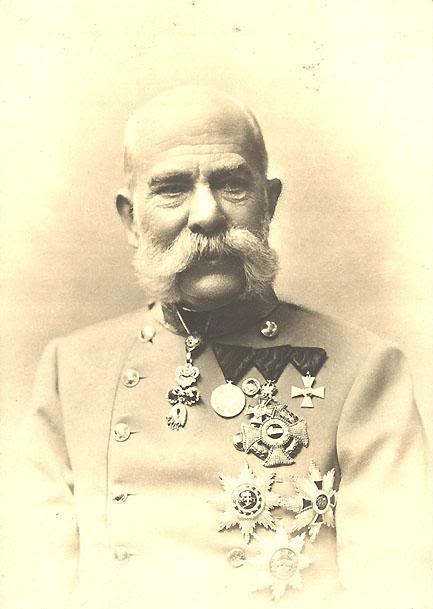
This guy, that’s what.


Franz Josef, the last of the Austro-Hungarian emperors and the last Habsburg to rule this country, was an insomniac. Because of that, he adopted a working day that started at six in the morning. He was also an autocrat. Because of that, lots of other people ended up having to do so as well. And in much the same way as the opening hours of pubs in England reflected the opinions of our teetotal leader David Lloyd George on how best to win the First World War until almost the end of the twentieth century, this is something that has persisted here.

And that’s why everything starts and finishes so much earlier. Lessons in school usually start at eight, unless the so-called ‘zero lesson’ is on the menu, in which case it can be seven; a total waste of time for everyone involved. And on the rare occasions I happen to be up really early, for example, to take a morning train to somewhere far away, I am still shocked by just how lively the station is at five in the morning. And unlike me, these people do it every day. And if you want to catch anyone at work on a Friday, forget it if it’s after midday; they’ll all have gone. Me too – early starts are one thing, but I’ve never met anyone I wanted to spend time with who wasn’t into the idea of an early finish. Well, at work, anyway…

Thursday, May 6, 2010

WARS OF MICE AND FROGS


Speaking in 1938, Neville Chamberlain, then the British Prime Monster, said these famous words: “How horrible, fantastic, incredible it is…a quarrel in a far away country between people of whom we know nothing…a quarrel which has already been settled in principle.” He was, of course, weaselling out of the UK’s treaty promises to come to the aid of Czechoslovakia if it was attacked. We all know what happened next.

Fast forward to 2010: today the UK is having what Yuko, a Japanese woman I used to know, once referred to as a ‘general erection’, as a result of which the latest in the chain of which Chamberlain was a link will ascend to the giddy heights of daring to assume that he knows how to run the country. And what a meal they are making of it. And with such unsavoury ingredients. Just look at these guys.


And these are the cream of the crop, the publicly acceptable faces, the top boys; no way they’d fiddle their expenses to keep their ducks in five-star style, be non-executive directors in firms flogging arms to anyone with the cash, or pour the pork to their cabinet colleagues while wearing nothing but a football shirt. But there are surely others who, if you opened the door and found them on your doorstep you’d be calling for the police at the double and telling your partner to hide the kids, the family silver, or, in Cameron’s case, probably the dog.

Of course, the media have been running saturation coverage the last few weeks; every time someone running for office opens their mouth it seems that someone is on hand to record it and comment on it, however dumb and fatuous it may be. And let’s spare a thought for the poor old spin doctors. They must be running on fumes after all the sleepless nights they’ve surely been having.

One thing that strikes me like a sledgehammer between the eyes is just how grotesquely melodramatic the language being deployed is. Look at this, for example:


The article that accompanies it is full of quotes like this one: “The Conservatives are the only choice if you want to rescue Britain from disaster.” Disaster? Guys, all we’re talking about here is a change of government in one of the most stable and prosperous countries on a planet that these days is largely run by multinational corporations anyway and, as we all should know by now, there’s not really much of a difference between any of the main British political parties these days. If these people spent the first fifteen minutes of their day in the skin of an African villager they’d perhaps wake up and realise what a pile of crap they are talking. This poster has more bedrock common sense in it than the Sun and most of the rest of the UK press ever have:


In Czech there’s a term for this absurd inflation of the trivial into matters of life and death – hence the title of this post. The more I think about the election, the more I'm reminded of Chamberlain's words, but from where I'm sitting it's the UK that seems far way and overly fixated on its parochial business. Whoever wins, most of the campaign promises that were made will be conveniently forgotten or watered down or explained away as being impossible because of something or other that has cropped up. Whoever wins, nothing is going to change too dramatically. Whoever wins, life will go on. Because, as Proudhon said, “All parties without exception, when they seek for power, are varieties of absolutism.”

He also said this:

“Whoever lays his hand on me to govern me is a usurper and tyrant, and I declare him my enemy.”

“To be GOVERNED is to be watched, inspected, spied upon, directed, law-driven, numbered, regulated, enrolled, indoctrinated, preached at, controlled, checked, estimated, valued, censured, commanded, by creatures who have neither the right nor the wisdom nor the virtue to do so. To be GOVERNED is to be at every operation, at every transaction noted, registered, counted, taxed, stamped, measured, numbered, assessed, licensed, authorised, admonished, prevented, forbidden, reformed, corrected, punished. It is, under pretext of public utility, and in the name of the general interest, to be place[d] under contribution, drilled, fleeced, exploited, monopolised, extorted from, squeezed, hoaxed, robbed; then, at the slightest resistance, the first word of complaint, to be repressed, fined, vilified, harassed, hunted down, abused, clubbed, disarmed, bound, choked, imprisoned, judged, condemned, shot, deported, sacrificed, sold, betrayed; and to crown all, mocked, ridiculed, derided, outraged, dishonoured. That is government; that is its justice; that is its morality.”

Cool guy. Much, much more on the ball than any of those lummoxes beseeching the British public to vote for them today. Where is he now that Europe needs him?

Saturday, May 1, 2010

LITOVELSKÉ POMORAVÍ

One of the many pluses of our village is its geographical position. The Sodom and Gomorrah of Olomouc, with all its fleshpots and creature comforts, is within bricking distance, the hills are not much further away, and only a few kilometres across the fields there’s Litovelské Pomoraví.

The second half of the name comes from the River Morava, which is, of course, where the eastern part of the Czech Republic gets its name from. The river rises in the hills on the Polish border and then makes its way southwards. By the time it gets to a place called Mohelnice, about 40 kilometres northwest of Olomouc, it gets fed up with the headlong rush of its giddy youth and starts to take it easy, creating a forested floodplain for itself and splitting up into at least six different channels and a sprawl of swamps, meanders, and oxbow lakes.

One of the places it passes through in this languid mode is Litovel, a small town that is sometimes rather fancifully referred to as the Venice of Haná, partly on the strength of the various arms of the Morava that lap around it, partly because of a solitary and rather modest canal that flows through its centre. It did make a rather more serious effort to turn itself into La Serenissima during the epic floods of 1997, though.

Put the two together and you get Litovelské Pomoraví, a nature reserve which stretches all the way from Mohelnice to just a few kilometres outside Olomouc. It has beauty and charm during every season, but to be honest, in winter, like pretty much everywhere else round here, it’s frozen solid and not much worth bothering with, and by the time summer comes round you have to compete with a copious and lively insect population, with mosquitoes playing a prominent role, a situation which persists until another winter comes round and kills the little bastards off, so unless you actually like mosquitoes, in which case you should probably stop reading forthwith and tootle off to take your medication, the best time to go there is in spring, when it is seriously glorious, what with the merry burbling of the waters and a thousand shades of green as the forest comes to life.

There are flowers up the wazoo – we’ve been there three times in the last six weeks. The first time we found it still full of snow and ice but also ‘bear garlic’ (which, by the way, makes a great soup) and snowdrops; two weeks later the snow and ice was just a memory and a whole bunch of other plants were coming through, and last Sunday it was just a riot of spring colours. It’s home to beavers, otters, deer, and various other quadrupeds, plus, of course, all manner of birds; there are even a bunch of ostriches living on a farm just by one of the villages that dot the main route through it. It’s crisscrossed with paths and tracks, so you can plan as long or as short a trip as you feel like, and there are quite a few points along the way where you can access it from a bus stop or by train. It’s very popular not just with walkers but also cyclists – it’s flatter than a witch’s tit – and horse riders, rafters, and canoeists.

And, of course, this being the Czech Republic, there’s no shortage of pubs along the way where the thirsty traveller can pause for refreshment. Pretty much every village has at least one watering-hole. A favourite of many is the Lovecká chata, or Hunter’s Cottage.


In days gone by it was a woodland retreat for the bigwigs in the Communist Party, who, just like the bloated capitalists they loved to contrast themselves with, were inordinately fond of mass-murdering whatever hapless fauna happened along – just down the road there’s a huge pheasant hatchery that was built to provide them with shotgun fodder – but in these more enlightened and egalitarian times it’s open to the masses and the workers as well. In addition to good Litovel beer and a menu with a strong flavour of game, there are horse-riding stables and even that staple of many a Party Congress, crazy golf; just what a boy needs when the Five-Year Plan is going awry...

Wednesday, April 7, 2010

EGGS, BUNNIES, AND BEATINGS

It’s the Wednesday after Easter, which we spent at the in-laws in South Bohemia, and I have just about recovered from the orgy of eating it involved. Not that this way of celebrating one of the key days in the Christian calendar is anything new for me.

When I was a kid in England the main way Easter seemed to be celebrated, certainly by everybody I knew, was to eat chocolate eggs and their contents till we either threw up or exploded. Even my father, not normally renowned for possessing any chocoholic tendencies, had a weakness for the type they used to make Easter eggs, which he claimed was a superior variety to the stuff he showed little interest in during the rest of the year.

Here chocolate perhaps plays rather a lesser role, and most of that in the form of rabbits rather than eggs. Instead, people tend to commemorate the crucifixion of Our Lord by eating lamb, something they almost never eat at other times of the year, or, failing that, a sponge cake baked in a lamb-shaped cake dish.

But the most enthusiastic celebrations of Easter, which take place on the Monday, are purely pagan, which is perhaps no great surprise in what is, apparently, statistically the most Godless country in Europe, together with Iceland. Posses of males roam the streets from early morning till noon, each armed with a tatar, a whacking-stick made of plaited willow wands and decorated at the business end with ribbons. Here's one as depicted by the great chronicler of Czech life Josef Lada:


They visit houses and use their tatars across the buttocks of the females they find there, who reward them with either painted hen’s eggs, like these:


or, in many cases, alcohol. In Slovakia, instead of this the guys often spray the women with either perfume or, less romantically, water, which prompted a young lady from there who I taught to write to me: “Today was Easter. I do not like Easter. The boys came to my house and irrigated me.”

The symbolism of this, while crystal clear, is also a source of great horror to many people who come here from places where strong notions of politically correct behaviour are in the ascendant. When I first got here I too was aghast at what I think I then categorised as an act of sexist physical aggression, but since then I’ve seen my ex-mother-in-law, a very dignified retired medical doctor in her sixties, skipping round the living room and giggling like a tipsy schoolgirl as a singer from the local opera house whisked her fundament with his tatar and with great gusto, and Lenka has made it very clear that it’s part of my duty as a good husband to give her at least a symbolic seeing-to, and these days I’m not so sure. Cultural sensitivity, innit?