Monday, May 24, 2010

IT'S ALL IN A NAME...

I heard not so long ago that the University of Western England is going to run a project designed to uncover the origins of every family name in the UK. What a wonderful idea. My own, so my dad told me, is an old Norse term for someone who lives in a valley, which is kinda prosaic, but there are all sorts of gems out there. I’ll return to this from a Czech point of view once I’ve put in the necessary research, but for now let’s begin with football, which, as in so many other areas, throws up some real gems.

Africa rather corners the market in weird and wonderful first names. Surprise Moriri, Naughty Mokoena, and Tonic Chabalala all ply (or used to) their trade in South Africa. And let’s not forget Bongo Christ, who hails from Congo. But these guys will have to go some to compete with Zimbabwe’s Laughter Chilembe, Have-A-Look Dube, Method Mwanyazi, and Danger Fourpence.

Another Zimbabwean, Limited Chicafa, has the kind of name that is just begging for its owner to be transferred to Juventus. In the season which, mercifully for them, has just ended, the Old Lady regularly featured a player called Ciro Immobile, although a cynic might note that with the number of defeats they suffered they might as well all have been called that. I think Limited would fit in just fine there.

Another fine Italian name belongs to the Australian Danny Invincibile, whose career has taken him to Swindon and Kilmarnock, who are both anything but. Also from Australia we have Norman Conquest, a man whose parents either had a great sense of humour or were potential Nobel laureates in obtuseness. Another whose folks’ choice probably gave him a few hard times at school has to be Wolfgang Wolf, who actually was the manager of Wolfsburg for some time – you couldn’t make it up, could you?

Leaving Europe once more, a big ‘hello’ to Johnny Moustache, from the Seychelles, and let’s spare a thought for Brazil’s Kaka and Hulk, who actually chose their noms de ballon, the silly billies. Still in Brazil, Rafael Scheidt never managed to overcome his surname at Celtic and Angelico Fucks featured in what has to be one of the greatest football headlines ever:


And Vágner Love just sounds like a porn star.

Small wonder, perhaps that Lyon’s Brazilian defender Fred opted for something a bit more prosaic.

Then, of course, there are the names that are simply unfortunate: Portuguese goalkeeper Quim, who gave the impetus to one of my all-time favourite gags on the Guardian’s football podcast, Germany’s Stefan Kuntz, Romanian international Razvan Rat, former England internationals Harry Daft and Segar Bastard, and a trio who have graced various English teams in the last decade or two, Nicky Butt, Dean Windass, and Danny Shittu. And Milan Fukal (there’s a Czech connection) is a man who, had his move to Derby County worked out, could have inspired some truly deathless chants.

But for my all-time favourites, we need to turn for inspiration to the world of film, to be precise, the Coen Brothers’ wonderful The Big Lebowski. Here’s some dialogue from the scene where the Dude, played by Jeff Bridges, goes to see Maude Lebowski (Juliane Moore) in her art studio:


MAUDE: Does the female form make you uncomfortable, Mr. Lebowski?

DUDE: Is that what that's a picture of?

MAUDE: In a sense, yes. Elfranco, my robe. My art has been commended as being strongly vaginal. Which bothers some men. The word itself makes some men uncomfortable. Vagina.

DUDE: Oh yeah?

MAUDE: Yes, they don't like hearing it and find it difficult to say. Whereas without batting an eye a man will refer to his "dick" or his "rod" or his "Johnson".

DUDE: "Johnson"?

Step forward, Dick Johnson (former goalkeeper of Tranmere Rovers) and Rod Johnson (Leeds United and Doncaster Rovers, among others). Congratulations, gentlemen. You win. And an honourable mention to American tennis player Andy Roddick.

Monday, May 10, 2010

WAKEY WAKEY!

Recognise this?


No? Stop wasting your time on internet trivia and beg, steal, borrow, or illegally download ‘The Ipcress File’ and don’t come back until you’ve watched it and made thorough notes. Yes? Read on.

Last night I watched it once again. I first saw it many years ago but have returned to it at regular intervals since then and it has never failed to delight me. Michael Caine’s performance as Harry Palmer is so cool you could build a mojito around it, and his enthusiasm for the kitchen was one of the main reasons why, when I was a teenager, I decided that cooking was a good thing for a guy to be able to do; the fact that the mushrooms he made such a fuss over were tinned rather than fresh is something I can accept as a sign of the times, just like his unfortunate tendency to refer to women as ‘birds’. I can forgive him almost anything for that moment when he says that he only takes off his glasses when he’s in bed.

One thing that did amuse me, though, was that when he was cruelly torn from the arms of Morpheus at the start of the film the time his alarm clock showed when he eventually bothered to turn it off, after slowly waking up, getting out of bed, and opening the curtains in a leisurely manner first, was eight o’clock. My immediate reaction was to burst out laughing. My second was to realise that this was another of those moments, like staying up late to watch Lukaš Bauer skiing in the Winter Olympics, when you realise you’ve changed. When I lived in England I too used to regard it as a gross imposition to have to get up at that time of the day and needed the combined ministrations of a strong cup of tea and ‘Today’ on the radio in order to face the world. Now my alarm is set for half past six and more often than not I’m up before it. What went wrong?

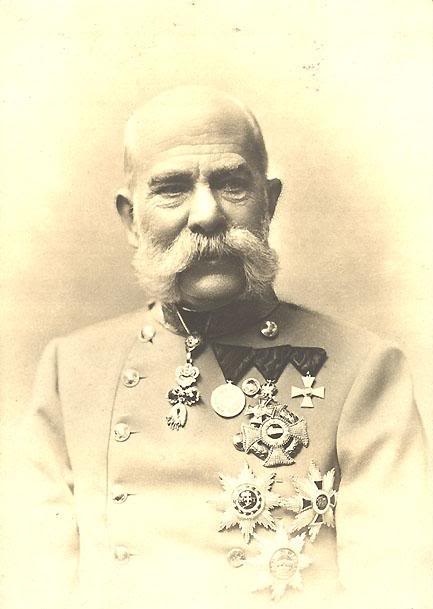
This guy, that’s what.


Franz Josef, the last of the Austro-Hungarian emperors and the last Habsburg to rule this country, was an insomniac. Because of that, he adopted a working day that started at six in the morning. He was also an autocrat. Because of that, lots of other people ended up having to do so as well. And in much the same way as the opening hours of pubs in England reflected the opinions of our teetotal leader David Lloyd George on how best to win the First World War until almost the end of the twentieth century, this is something that has persisted here.

And that’s why everything starts and finishes so much earlier. Lessons in school usually start at eight, unless the so-called ‘zero lesson’ is on the menu, in which case it can be seven; a total waste of time for everyone involved. And on the rare occasions I happen to be up really early, for example, to take a morning train to somewhere far away, I am still shocked by just how lively the station is at five in the morning. And unlike me, these people do it every day. And if you want to catch anyone at work on a Friday, forget it if it’s after midday; they’ll all have gone. Me too – early starts are one thing, but I’ve never met anyone I wanted to spend time with who wasn’t into the idea of an early finish. Well, at work, anyway…

Thursday, May 6, 2010

WARS OF MICE AND FROGS


Speaking in 1938, Neville Chamberlain, then the British Prime Monster, said these famous words: “How horrible, fantastic, incredible it is…a quarrel in a far away country between people of whom we know nothing…a quarrel which has already been settled in principle.” He was, of course, weaselling out of the UK’s treaty promises to come to the aid of Czechoslovakia if it was attacked. We all know what happened next.

Fast forward to 2010: today the UK is having what Yuko, a Japanese woman I used to know, once referred to as a ‘general erection’, as a result of which the latest in the chain of which Chamberlain was a link will ascend to the giddy heights of daring to assume that he knows how to run the country. And what a meal they are making of it. And with such unsavoury ingredients. Just look at these guys.


And these are the cream of the crop, the publicly acceptable faces, the top boys; no way they’d fiddle their expenses to keep their ducks in five-star style, be non-executive directors in firms flogging arms to anyone with the cash, or pour the pork to their cabinet colleagues while wearing nothing but a football shirt. But there are surely others who, if you opened the door and found them on your doorstep you’d be calling for the police at the double and telling your partner to hide the kids, the family silver, or, in Cameron’s case, probably the dog.

Of course, the media have been running saturation coverage the last few weeks; every time someone running for office opens their mouth it seems that someone is on hand to record it and comment on it, however dumb and fatuous it may be. And let’s spare a thought for the poor old spin doctors. They must be running on fumes after all the sleepless nights they’ve surely been having.

One thing that strikes me like a sledgehammer between the eyes is just how grotesquely melodramatic the language being deployed is. Look at this, for example:


The article that accompanies it is full of quotes like this one: “The Conservatives are the only choice if you want to rescue Britain from disaster.” Disaster? Guys, all we’re talking about here is a change of government in one of the most stable and prosperous countries on a planet that these days is largely run by multinational corporations anyway and, as we all should know by now, there’s not really much of a difference between any of the main British political parties these days. If these people spent the first fifteen minutes of their day in the skin of an African villager they’d perhaps wake up and realise what a pile of crap they are talking. This poster has more bedrock common sense in it than the Sun and most of the rest of the UK press ever have:


In Czech there’s a term for this absurd inflation of the trivial into matters of life and death – hence the title of this post. The more I think about the election, the more I'm reminded of Chamberlain's words, but from where I'm sitting it's the UK that seems far way and overly fixated on its parochial business. Whoever wins, most of the campaign promises that were made will be conveniently forgotten or watered down or explained away as being impossible because of something or other that has cropped up. Whoever wins, nothing is going to change too dramatically. Whoever wins, life will go on. Because, as Proudhon said, “All parties without exception, when they seek for power, are varieties of absolutism.”

He also said this:

“Whoever lays his hand on me to govern me is a usurper and tyrant, and I declare him my enemy.”

“To be GOVERNED is to be watched, inspected, spied upon, directed, law-driven, numbered, regulated, enrolled, indoctrinated, preached at, controlled, checked, estimated, valued, censured, commanded, by creatures who have neither the right nor the wisdom nor the virtue to do so. To be GOVERNED is to be at every operation, at every transaction noted, registered, counted, taxed, stamped, measured, numbered, assessed, licensed, authorised, admonished, prevented, forbidden, reformed, corrected, punished. It is, under pretext of public utility, and in the name of the general interest, to be place[d] under contribution, drilled, fleeced, exploited, monopolised, extorted from, squeezed, hoaxed, robbed; then, at the slightest resistance, the first word of complaint, to be repressed, fined, vilified, harassed, hunted down, abused, clubbed, disarmed, bound, choked, imprisoned, judged, condemned, shot, deported, sacrificed, sold, betrayed; and to crown all, mocked, ridiculed, derided, outraged, dishonoured. That is government; that is its justice; that is its morality.”

Cool guy. Much, much more on the ball than any of those lummoxes beseeching the British public to vote for them today. Where is he now that Europe needs him?

Saturday, May 1, 2010

LITOVELSKÉ POMORAVÍ

One of the many pluses of our village is its geographical position. The Sodom and Gomorrah of Olomouc, with all its fleshpots and creature comforts, is within bricking distance, the hills are not much further away, and only a few kilometres across the fields there’s Litovelské Pomoraví.

The second half of the name comes from the River Morava, which is, of course, where the eastern part of the Czech Republic gets its name from. The river rises in the hills on the Polish border and then makes its way southwards. By the time it gets to a place called Mohelnice, about 40 kilometres northwest of Olomouc, it gets fed up with the headlong rush of its giddy youth and starts to take it easy, creating a forested floodplain for itself and splitting up into at least six different channels and a sprawl of swamps, meanders, and oxbow lakes.

One of the places it passes through in this languid mode is Litovel, a small town that is sometimes rather fancifully referred to as the Venice of Haná, partly on the strength of the various arms of the Morava that lap around it, partly because of a solitary and rather modest canal that flows through its centre. It did make a rather more serious effort to turn itself into La Serenissima during the epic floods of 1997, though.

Put the two together and you get Litovelské Pomoraví, a nature reserve which stretches all the way from Mohelnice to just a few kilometres outside Olomouc. It has beauty and charm during every season, but to be honest, in winter, like pretty much everywhere else round here, it’s frozen solid and not much worth bothering with, and by the time summer comes round you have to compete with a copious and lively insect population, with mosquitoes playing a prominent role, a situation which persists until another winter comes round and kills the little bastards off, so unless you actually like mosquitoes, in which case you should probably stop reading forthwith and tootle off to take your medication, the best time to go there is in spring, when it is seriously glorious, what with the merry burbling of the waters and a thousand shades of green as the forest comes to life.

There are flowers up the wazoo – we’ve been there three times in the last six weeks. The first time we found it still full of snow and ice but also ‘bear garlic’ (which, by the way, makes a great soup) and snowdrops; two weeks later the snow and ice was just a memory and a whole bunch of other plants were coming through, and last Sunday it was just a riot of spring colours. It’s home to beavers, otters, deer, and various other quadrupeds, plus, of course, all manner of birds; there are even a bunch of ostriches living on a farm just by one of the villages that dot the main route through it. It’s crisscrossed with paths and tracks, so you can plan as long or as short a trip as you feel like, and there are quite a few points along the way where you can access it from a bus stop or by train. It’s very popular not just with walkers but also cyclists – it’s flatter than a witch’s tit – and horse riders, rafters, and canoeists.

And, of course, this being the Czech Republic, there’s no shortage of pubs along the way where the thirsty traveller can pause for refreshment. Pretty much every village has at least one watering-hole. A favourite of many is the Lovecká chata, or Hunter’s Cottage.


In days gone by it was a woodland retreat for the bigwigs in the Communist Party, who, just like the bloated capitalists they loved to contrast themselves with, were inordinately fond of mass-murdering whatever hapless fauna happened along – just down the road there’s a huge pheasant hatchery that was built to provide them with shotgun fodder – but in these more enlightened and egalitarian times it’s open to the masses and the workers as well. In addition to good Litovel beer and a menu with a strong flavour of game, there are horse-riding stables and even that staple of many a Party Congress, crazy golf; just what a boy needs when the Five-Year Plan is going awry...

Wednesday, April 7, 2010

EGGS, BUNNIES, AND BEATINGS

It’s the Wednesday after Easter, which we spent at the in-laws in South Bohemia, and I have just about recovered from the orgy of eating it involved. Not that this way of celebrating one of the key days in the Christian calendar is anything new for me.

When I was a kid in England the main way Easter seemed to be celebrated, certainly by everybody I knew, was to eat chocolate eggs and their contents till we either threw up or exploded. Even my father, not normally renowned for possessing any chocoholic tendencies, had a weakness for the type they used to make Easter eggs, which he claimed was a superior variety to the stuff he showed little interest in during the rest of the year.

Here chocolate perhaps plays rather a lesser role, and most of that in the form of rabbits rather than eggs. Instead, people tend to commemorate the crucifixion of Our Lord by eating lamb, something they almost never eat at other times of the year, or, failing that, a sponge cake baked in a lamb-shaped cake dish.

But the most enthusiastic celebrations of Easter, which take place on the Monday, are purely pagan, which is perhaps no great surprise in what is, apparently, statistically the most Godless country in Europe, together with Iceland. Posses of males roam the streets from early morning till noon, each armed with a tatar, a whacking-stick made of plaited willow wands and decorated at the business end with ribbons. Here's one as depicted by the great chronicler of Czech life Josef Lada:


They visit houses and use their tatars across the buttocks of the females they find there, who reward them with either painted hen’s eggs, like these:


or, in many cases, alcohol. In Slovakia, instead of this the guys often spray the women with either perfume or, less romantically, water, which prompted a young lady from there who I taught to write to me: “Today was Easter. I do not like Easter. The boys came to my house and irrigated me.”

The symbolism of this, while crystal clear, is also a source of great horror to many people who come here from places where strong notions of politically correct behaviour are in the ascendant. When I first got here I too was aghast at what I think I then categorised as an act of sexist physical aggression, but since then I’ve seen my ex-mother-in-law, a very dignified retired medical doctor in her sixties, skipping round the living room and giggling like a tipsy schoolgirl as a singer from the local opera house whisked her fundament with his tatar and with great gusto, and Lenka has made it very clear that it’s part of my duty as a good husband to give her at least a symbolic seeing-to, and these days I’m not so sure. Cultural sensitivity, innit?

Wednesday, March 31, 2010

THE BROWN BROWN BREAD OF HOME

When I first came to what was then the Czechoslovak Socialist Republic, way back when, I was looking forward to quite a few things. One of them was the beer, which I had already performed extensive tests on before leaving England. Even in those days you could get Budvar and Pilsner Urquell there and the results, let me be quite honest, played no small role in my decision to come here. Another was curiosity about the food.

In 1985 I picked up a Czech cookery book published in about 1960 for 50p in a second-hand bookshop in Faversham, and for months after that Czech dumplings were staples of my diet. I was curious as to how authentic the good solid rib-sticking ostrich egg lookalikes I boiled up were, and to this day I’m still not sure whether I was disappointed or delighted to find out they were pretty close to the real thing.

I was also looking forward to the bread, chiefly because of happy memories of what I had had when I was living in Germany, which is surely one of the absolutely very best countries in the whole world when it comes to bakery goods and which, I assumed, would be closely followed by its Central European neighbours. But in this there was no question about delight or disappointment.

In 1989 Britain hadn’t quite scaled the giddy heights of grotesque consumerism that seem to be the norm these days, but in terms of the variety of food on offer it still pissed all over Czechoslovakia from a great height. The main loaf to be found here at the time was one baked with rye that looked like this:


Not only visually but also in terms of edibility, it resembled nothing quite so much as Thunderbird 2:


It was OK when it was fresh, but usually it wasn’t, and it went sour and hard pretty fast. As did I when expected to eat it. Tears welled up in my pampered capitalist eyes when I thought of all those granary loaves just sitting in what until recently had been my local shop, and even good old English sliced bread, of which my dad used to swear one of the main ingredients was also in the recipe for soap flakes, had me slobbering like one of Pavlov’s dogs when I thought of it.

Of course, none of the people I knew had the slightest sympathy for my plight. Even without ever going to England, they just knew we lived on slops and that one of the lowest points of our wretched diet was our bread, and of course now that loads of them have been there their contempt is even greater – just watch them piling off the bus from London and hightailing it home to Mum to sink their famished choppers into the bread they grew up with.

Of course, in the Czech Republic nowadays we too have Tesco and 24/7 shopping-till-you-dropping and instore bakeries and wholegrain multicereal bread rolls and ciabatta baked with stoneground wholegrain flour from a south-facing slope and even something resembling a granary loaf, but the one that is sold in the biggest quantities is still our old friend Thunderbird 2.

But that’s the way it is with bread, isn’t it? Our daily bread. The staff of life. And what we grow up with, however dismal it may be in objective terms, is always going to be the yardstick against which everything else is tried and found wanting. Which is why I will still occasionally indulge myself in an occasional sandwich made with sliced white bread, and preferably containing traditional delicacies of my homeland such as bacon (from Denmark) or corned beef (from Argentina). Unbeatable!

Sunday, March 14, 2010

A CZECH LESSON

Take a look at the picture below. Think long and hard. Use the visual information to help you. Now take a deep breath, forget the fact that you may not speak a word of Czech, and see if you can provide a translation into English.


If you’ve come up with ‘NO SMOKING’, well, close but no cigar. Or these days, more probably, no cigarette. I have done some thorough investigative fieldwork on this. I started at the main railway station in Olomouc, where numerous of these signs are prominently displayed on the exterior walls, although at the time of day I pass through there they are frequently obscured by clouds of, you’ve guessed it, cigarette smoke, chiefly generated, as far as I can see, by schoolkids and the homeless, both of whom gather there in large numbers. So I decided to do a backup study outside the teacher training college where I work, just in case. There are similar signs there and a presumably literate bunch of punters hanging round outside. This is what I found just a couple of metres from one of the signs:


So I think I can now say, with some authority, backed up by empirical studies and observation, that ZÁKAZ KOUŘENÍ actually means something like “Please come and stand here with all your friends and enjoy a cigarette together, after which you are welcome to use your imagination and the detritus of said cigarette to decorate the place in whichever way you feel is most appropriate.” Say what you like about Czech; it sure as hell is an economical language – where else would you find two little words so redolent and pregnant with meaning as that?